

‘Wuthering Heights’: We Are in a Death and Romance-Obsessed Era
By Ruby McMahon
In recent years, there appears to be a sudden boom of gothic literature recirculating throughout the media. In reality, the boom isn’t so sudden. From “Nosferatu” in 2024, “Frankenstein” in 2025, and “Wuthering Heights” in 2026, directors like Robert Eggers, Guillermo del Toro, and Emerald Fennel are focusing on telling centuries-old stories that are surrounded by an air of dreariness and darkness. Ultimately, they combine our love for horror and romance while engaging in larger societal conversations.
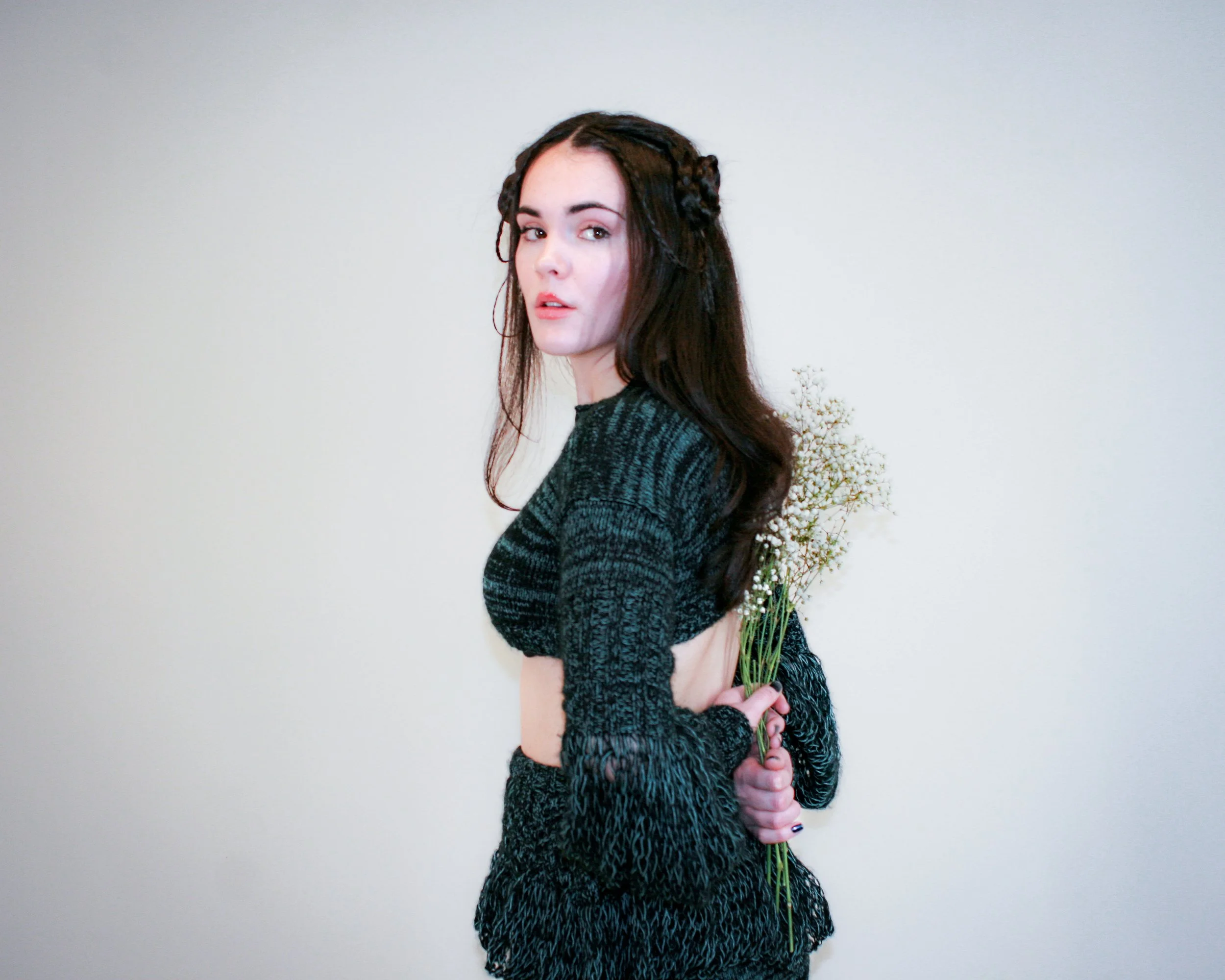
Model Marisa Alicandro dressed in a knit top and skirt designed by Lily Wickersham in her gothic and medieval-inspired style.
Hairstylist | Victoria Bailey
Photographer | Lily Wickersham.
These films are all key examples of gothic literature—a genre that emerged two and a half centuries ago—and yet are classical pieces of art that continue to stay trending within 21st-century pop culture. One thing is clear: we love the retelling of old stories, especially those about the Victorians.
“Nosferatu” and “Wuthering Heights” have both received great criticism—even before release. Gothic films are often called slow-paced or overly camp, and so too was “Nosferatu.” Lily Rose Depp’s character, Ellen Hutter, was believed by some to be too over-the-top and not truly believable, while her co-stars were thought to be more convincing in their roles.
In 2024, “Nosferatu” was the standout film of that year. It was the major gothic film in the mainstream media landscape, and while it received pushback, it also garnered an appreciative fan base. For those who value the style of the Victorian Era, as well as alternative interests—such as horror—“Nosferatu” invokes something much deeper than a retelling of the 1922 film: it is an almost indescribable, guttural feeling that combines eeriness, the supernatural, with the exuberance of fear and the subtleties of romance and eroticism.
For junior fashion design student Lily Wickersham, Eggers’s “Nosferatu” opened her eyes to the realm of gothic films, allowing her to apply their ghostly, cynically romantic beauty into her personal aesthetic as well as her garments.
“I am definitely getting more into the Victorian. I think I’ve been obsessed with ‘Nosferatu’ since it came out. I think that kind of silhouette has really interested me so far, and I would like to explore more of that," said Wickersham.
Starting out in the design program, Wickersham was interested in her rock influences, such as on-stage costuming, but has now evolved into a much older aesthetic.
“There’s a whole topic of having more older silhouettes while trying to make it modern, and I think some of these things aren’t as sellable... But I think that’s okay, and I think that both of these things can coexist. Silhouettes come and go, but I think it’s still fine that some stuff stays around,” said Wickersham.
The recent “Frankenstein” movie was a striking critical success, with audiences amazed by Del Toro’s masterfully artistic version of storytelling, with beautiful costumes that contributed greatly to the aesthetic and the success of the story. For Wickersham, she found herself highly engaged and creatively energized by “Frankenstein.”
“I was really impressed with how you look at these garments like Mia Goth is wearing. With the silhouettes and the prints that they use, like having the brain scans and the cells, I think they also communicated that gothic theme to it,” said Wickersham.
While there is a market for those who clearly enjoy period films and the gothic genre, Wickersham pointed out that it is not yet mainstream. It seems to be an aesthetic and genre that is in a transformational phase, where it is coming into the limelight, while still being aimed towards a somewhat niche audience.
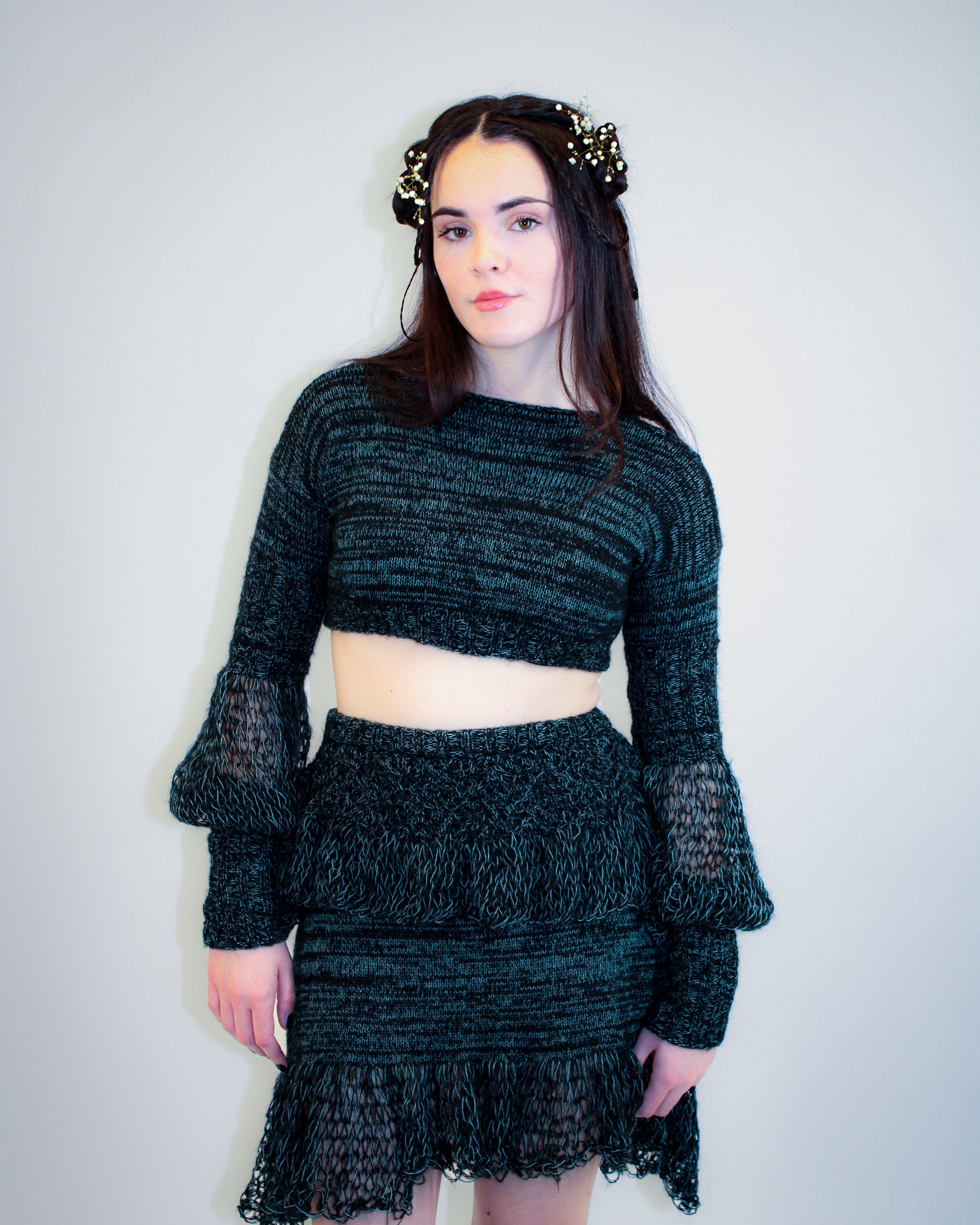
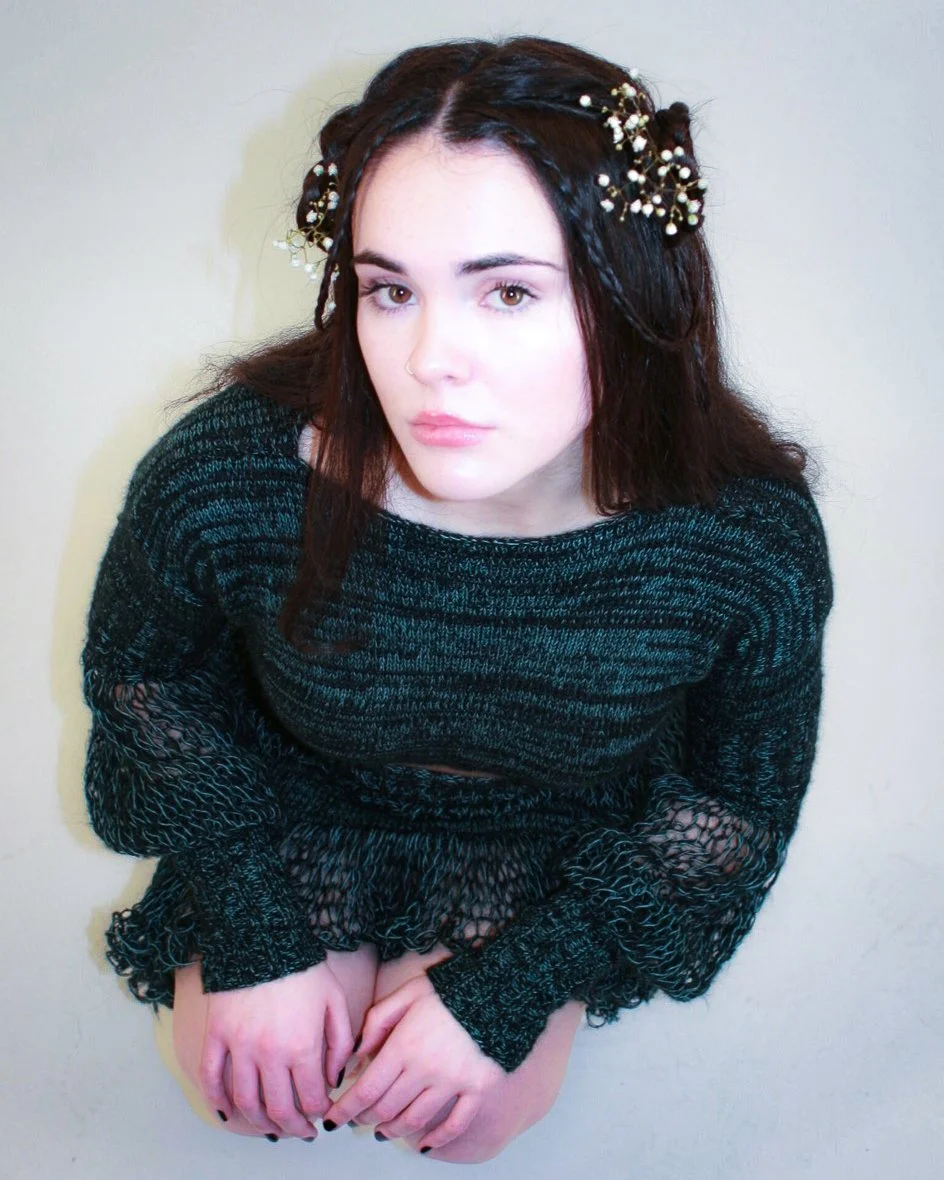
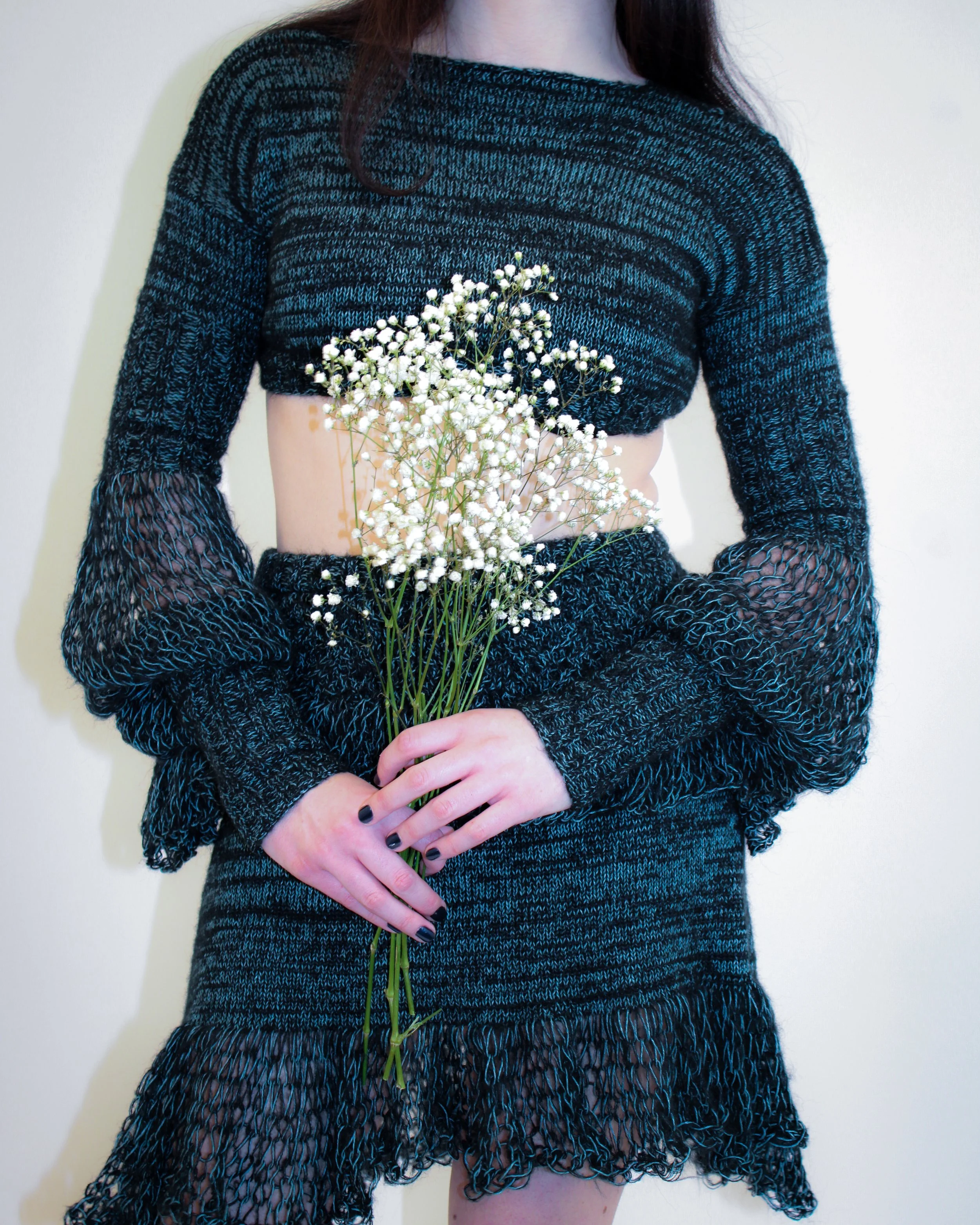
We are in an era when this niche appreciation of the beautiful, the weird, and the eclectic is influencing pop culture and people’s aesthetic.
“It’s impacting mine,” Wickersham said. “It’s probably not the most popular thing, but I think it’ll exist in the pop culture zeitgeist that is going on right now.”
In Wickersham’s current garments, such as her recent knitwear pieces, she shows her knowledge and her creative vision for darkness in beauty. She is inspired by reworked materials, artisanal goods like Victorian hair jewelry, medieval and gothic interpretations—all of which seep through every surface of her work. Wickersham had previously found inspiration and appreciation from “Nosferatu” and “Frankenstein,” and now wonders what impact “Wuthering Heights” will have on herself and others, especially amidst the conversation that is being had about the film.
“I think the movie [“Wuthering Heights”] is not seen in the best light, even before it came out. Who knows if that will negatively impact this kind of style. I think that companies like Dilara and Vivienne Westwood bring attention to these techniques that I think should continue.”
Is gothic literature synonymous with canonicals? Will our interest in spooky, old-timey romances eventually fade? Will they become too historically inaccurate, losing credibility and interest? Wickersham thinks that in the current media environment, with “Wuthering Heights” and other emerging gothic films, our obsession with dark romanticism is only just beginning.
