

The London Look
By Hannah Bell
When Arianna LeCruise left Marist University for a semester abroad in London, she expected a change of scenery. When she traveled abroad, she didn’t expect a complete shift in how she understood fashion, not just as aproduct, but as cultural identity and daily ritual. Colleges in the U.S. are full of leggings, sweatpants, and sneakers — these options feel simple and easy. “New Yorkers prioritize comfort and functionality over artistry and experimentation,” she said. London, however, introduced her to what she calls a “get ready culture.”

Photographer | Arianna LeCruise
“London has more dressed up streetwear,” she explained, “even casual looks feel intentional.” Trench coats sweep the sidewalks. Structured layers replace hoodies. Outfits feel styled rather than thrown together. The difference isn’t about luxury, it’s about effort. Everyday street style in London feels put-together, chic and modern-professional.
There’s a shared understanding that getting dressed isn’t just routine, it’s a ritual. It’s a form of self-expression, a declaration of identity. Clothing feels carefully considered and curated, as if each look carries purpose. In London, style becomes a language: a way to signal creativity, confidence and individuality in even the most ordinary moments.
“Fashion students at Marist are honestly on the same level as London.” In London, experimental fashion exists everywhere, not just within the fashion department.
An ordinary outfit in London could have emo, goth, grunge and luxury pieces all in harmony. Fur coats are popular especially over vintage band tees and tailored suits blend with platform boots. Subcultures aren’t as nicheas in the U.S., instead, they are celebrated.
In neighborhoods like Oxford Street and Notting Hill, street style becomes its own runway. Vintage shops fuel sustainable wardrobes, and luxury pieces are layered into thrifted finds to create unique and experimental outfits.
Compared to Marist’s campus, where trends can feel unified, London thrives on contrast. There’s a frequent shared rhythm to how students dress, similar silhouettes, similar brands, similar interpretations of what’s “in” that season. On any given day, you might see variations of the same outfit formula repeated across campus.
In London, that uniformity dissolves. One block can hold sharply tailored minimalists, punk-inspired maximalists, vintage romantics and sleek corporate creatives all moving side by side. The city doesn’t revolve around a single dominant trend; it embraces friction between aesthetics. Individuality isn’t the exception — it’s the baseline. That constant visual dialogue between subcultures makes the streets feel dynamic, almost theatrical, as if fashion is happening in real time rather than following a predetermined script.
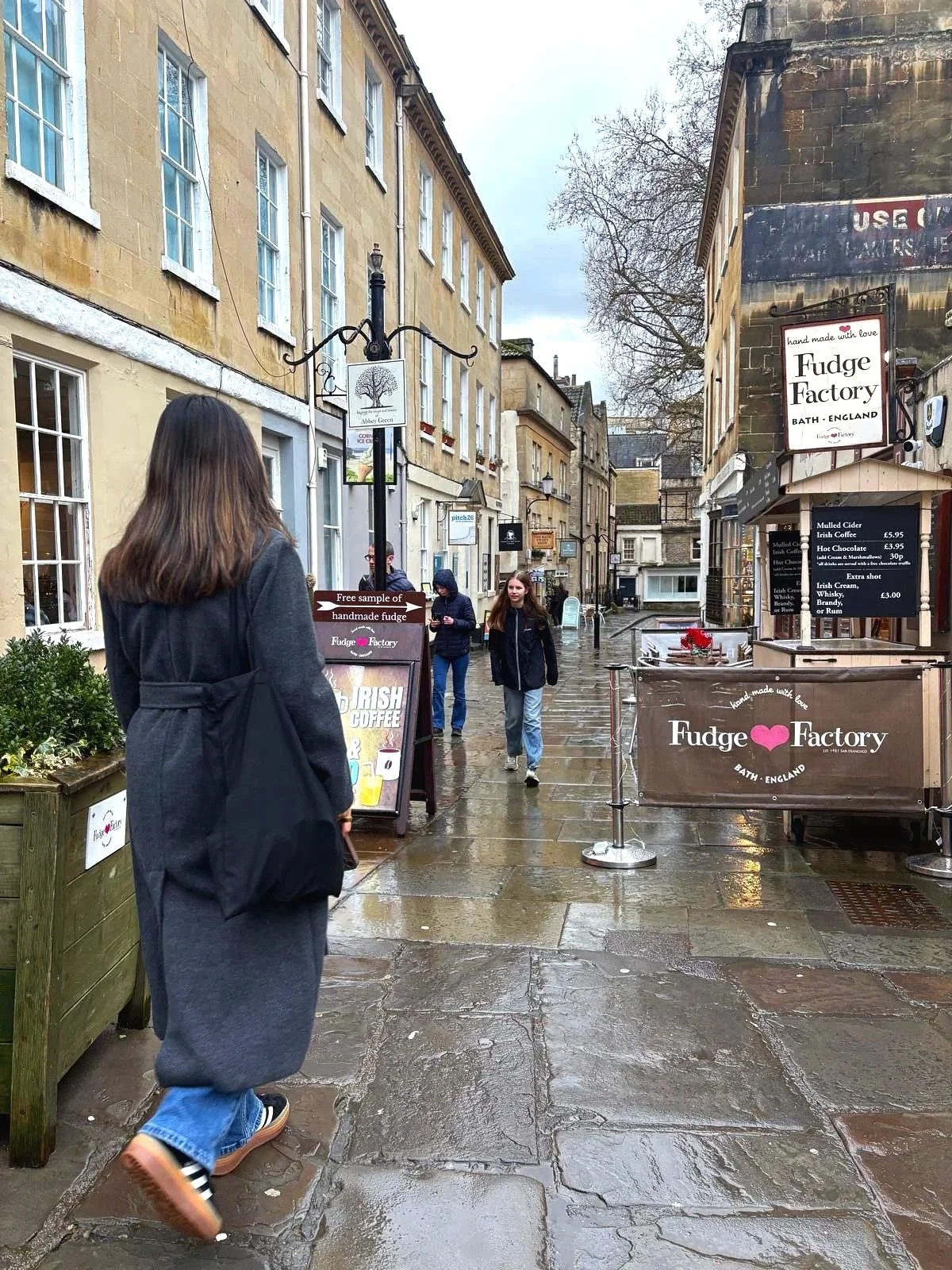
Photographer | Arianna LeCruise
But “fitting in” in London doesn’t mean blending — it means elevating. It means being intentional. It means leaving the pajama pants behind. LeCruises’ wardrobe has evolved into something more structured and styled, reflecting the city’s emphasis on presentation and individuality. Pieces that once felt “good enough” for class have been replaced with garments that feel intentional. Tailored trousers instead of sweats, layered outerwear instead of a last-minute hoodie, accessories that complete a look rather than simply serve a function. LeCruise has become more mindful of silhouettes, proportion and texture. Shifting her thinking about how an outfit reads from across the street as much as how it feels in a lecture hall.
The shift isn’t about dressing formally — it’s about dressing deliberately. In a city where style operates as self-definition, her closet now mirrors that same awareness, less reactive to comfort culture, more reflective of personal narrative.
LeCruise credits Marist’s fashion merchandising program for preparing her to engage with a fashion capital like London. Taking classes abroad allows her to contextualize what she sees in real time. She highlights her “Creative Marketing and Fashion” course. “It offers a global view of fashion that expands my view of the industry that was previously limited to just the U.S.,” she explained.
And when London Fashion Week arrives, the entire city transforms.
“The energy is way more electric and chaotic, in the best way,” LeCruise said. Central London becomes creatively charged, with fashion bleeding from official venues into the streets. Compared to New York Fashion Week, she sees London as less commercial and more artistic. New York feels polished and brand-driven; London feels conceptual and risk-taking. Emerging designers dominate conversations. Silhouettes push boundaries. Subcultures, vintage and gender-fluid expression shape the aesthetics.
London isn’t afraid to make a statement. LeCruise described it as a blend of avant-garde and political. Designers comment on identity, climate change and gender expression. Sustainability feels embedded, not performative. Vintage shops thrive on upcycled materials and visible mending appear both on runways and in everyday wardrobes.
Studying in London gives fashion students an advantage because it allows them to learn different perspectives about the industry worldwide. Fashion is no longer just American retail cycles or domestic brands. It becomes global, political, and cultural. “Fashion is so different everywhere and it is fascinating.”
If she could bring one piece of London fashion culture back to campus, Arianna answers instantly: “Fur coats and trench coats.” But beyond the statement outerwear, it’s the perspective she’d want to carry home, the belief that what you wear, and how you wear it, truly matters. Her advice to future Marist fashion students considering London? “Do it. And make sure you bring all your favorite clothes,” she laughed. “Leave the PJ pants behind.” Because in London, fashion isn’t occasional. It’s every day.
