

Sustainability’s Stepping Stone

By Kelly Behr
Sustainability is a word so frequently thrown around, it’s losing any semblance of universal understanding. Although the term regularly appears in conversations regarding our ethical responsibility to the environment (i.e. recycling or greenhouse gas management), sustainability has a much deeper meaning. In its simplest form, and therefore its broadest, it's about preserving and maintaining society, politics, culture, and the environment. Attempting to address all of this is no easy feat. To appropriately embody this definition requires both individual commitment and immense collaboration.
It’s becoming increasingly apparent that younger generations are preemptively relied upon, and expected to, clean up after those that came before us. To ensure we don’t make the same mistakes, we must refine what it means to be “sustainable” which starts by improving our ability to tolerate difference. In a society centered around individuality, it’s quite ironic how inept we are at respecting the very traits that set us apart from one another. As a result, our egos often prolong progress. Although this poses a huge responsibility, we all have the means to engage. Believe it or not, our individuality is not lost in a common cause, it’s the key to it. Therefore, the guidance we seek already exists within us and around us, we just need to find the courage to lean on each other. A worthwhile form of exercising this skill lies within the practice of yoga.
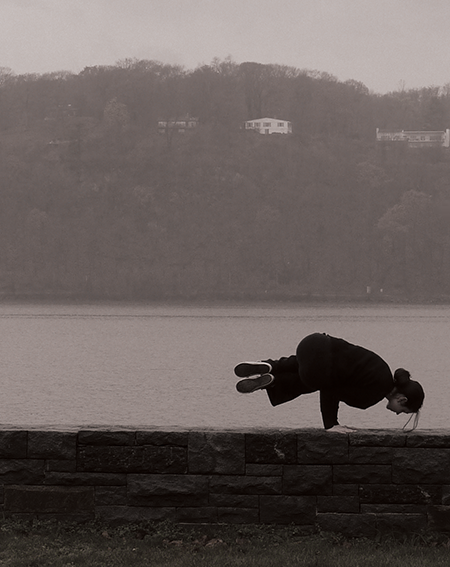
Through exploring individuality and building community, yoga’s lessons follow us off the mat.
Recognizing that sustainability and what most people understand yoga to be feel a bit disjointed, so before continuing, it’s imperative to establish some credibility. In the spring of 2024, I took a Yoga Philosophy course and became enamored with its rich heritage. After realizing how much I started to rely on these lessons, I enrolled in a 200 hour teacher training. Since August of 2024, I’ve been teaching here on campus and continue to deepen my knowledge through additional training programs.
The notion that yoga is solely a physical practice is a common misconception; it actually extends well beyond the mat. Made up of eight limbs and codified in the ancient Sanskrit language, the term yoga directly translates to “yoke,” which really means to unite. Our time on the mat is actually referred to as asana, which ironically translates to “seat” and it’s not even the first limb, it's the third. The limbs that precede form a loose code of conduct and those that succeed are a bit more conceptual. For example, the sixth limb dharana, or concentration, could relate to anything; it has a less tangible disposition. Fundamentally, they offer yoga the flexibility to take on several forms unique to each of us. Highlighting asana simply provides a physical framework to participate in. If yoga’s goal is to unite and establish relative balance within our lives, asana’s ability to sift through our mind chatter, our citta, exercises that centered awareness.
Our physical practice demands us to confront discomfort. It begs us to survive particularly controlled environments so we can navigate the uncontrollable ones. While asana challenges our competitive understanding of physical strength, yoga more broadly challenges our understanding of mental strength. It calls on us to consider our humanity, our community, our individuality, and our malleability. It reminds us of our power, and therefore, our impact as neighbors and as friends.

It’s important to note that yoga manifests differently for everyone. It might not be on a mat or in your breath. What yoga unearths can be found in a multitude of ways, contingent only upon an inherent form of confrontation. It must encourage discernment and inquisition with no ulterior prompt or attempt at accuracy. Yoga is not about the absence of thought; it’s about the freedom and permeability of it. I urge you to melt into whatever brings all this to the surface. Do not shy away from it. Listen to it. Question it. Most importantly, respect it. Regardless of what yoga looks like to you, it has the power to strain divisive environments.
As we creep further into adulthood, we have even more agency over who we show up as and how we interact with others, so we must acknowledge how we parallel, not only how we diverge. In doing so, our growing sense of self nurtures the confidence to both withstand and explore our inevitable differences. By weakening our sense of ego, we cast a wider net to incorporate a collective mindset. Once established, sustainability’s magnitude feels far more manageable. Allow yoga to be your stepping stone.
